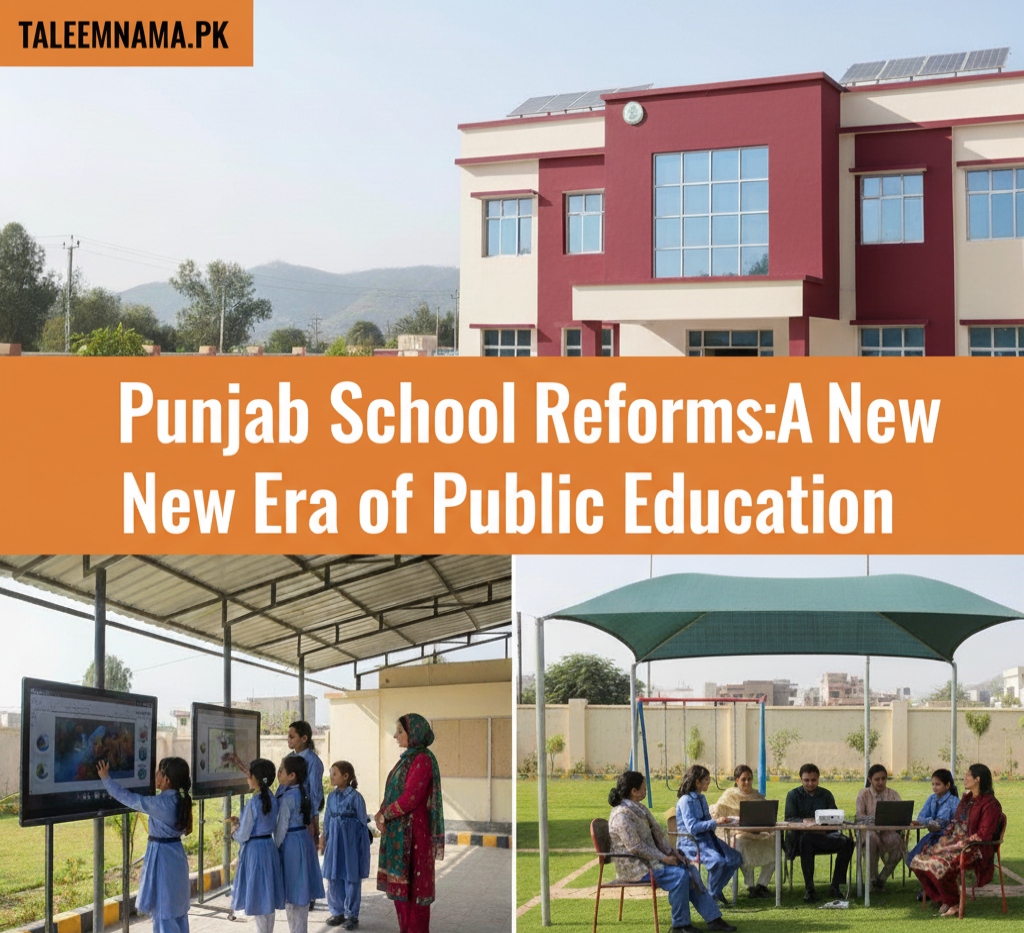
Punjab School Reforms: A New Era of Public Education
By: Zainab Sehar
Education is the foundation of any nation’s progress. In Punjab, Pakistan’s most populous province, improving the quality of education — especially in government schools — has been a top priority. Over the past decade, the Government of Punjab has introduced a series of educational reforms, focusing on access, quality, transparency, and innovation.
From digital monitoring systems to teacher training programs and infrastructure development, these initiatives have significantly transformed the public education landscape. This article explores the progress, key reforms, achievements, and ongoing challenges of government schools in Punjab.
1. Government’s Commitment to Educational Reforms
The Punjab government has implemented multiple reforms to uplift the education system and ensure quality learning opportunities for all children.
(a) Education for All Program
Under the “Education for All” initiative, thousands of out-of-school children have been enrolled in public schools across the province. Special enrolment drives in rural and underprivileged areas helped increase literacy and reduce dropout rates.
(b) Digital Monitoring Systems
The introduction of the School Information System (SIS) and Punjab Monitoring Indicators has brought transparency and accountability. These platforms track:
- Teacher and student attendance
- Academic performance
- Infrastructure development
- Resource allocation
This data-driven approach allows timely decision-making and performance evaluation.
(c) Teacher Training and Professional Development
Through the Quaid-e-Azam Academy for Educational Development (QAED), teachers across Punjab receive modern pedagogical training. The goal is to equip them with 21st-century teaching skills that improve classroom learning outcomes.
2. Infrastructure Development
The government has heavily invested in improving the physical environment of public schools. Key areas of focus include:
- Renovation of old school buildings
- Construction of new classrooms
- Provision of electricity, clean drinking water, and washrooms
- Supply of modern furniture
Such improvements not only enhance learning environments but also boost attendance and retention rates.
3. Move Towards Digital Education
In line with global trends, Punjab’s education system is transitioning toward digital learning.
- Establishment of Smart Classrooms
- Access to e-learning content
- Implementation of Online Assessment Systems
- Launch of School Education Department Punjab App for data management
These initiatives have modernized classroom instruction and administrative processes, making schools more efficient and student-centered.
4. Improved Student Performance
According to data from the Punjab Examination Commission (PEC), student performance in public schools has improved significantly over recent years.
- Noticeable gains in Urdu, Mathematics, and Science
- Focused improvement plans for low-performing schools
- Remedial programs to assist struggling students
These results reflect the positive impact of teacher training and curriculum reforms.
5. Attendance and Monitoring Systems
Chronic absenteeism among teachers and students was once a major problem. However, the introduction of biometric attendance systems and field monitoring teams has improved discipline and accountability.
- Digital attendance reduces manipulation and ghost teachers
- Monitoring visits ensure regular oversight
- Reward and penalty mechanisms motivate better performance
As a result, punctuality and productivity have increased across schools.
6. Focus on Girls’ Education
Girls’ education has received special attention from the Punjab government, especially in rural and underserved areas.
Key initiatives include:
- Girls Stipend Program offering conditional cash transfers
- Free transportation facilities for students in remote areas
- Upgradation of middle and high schools for girls
- Recruitment of female teachers to build parental trust
These interventions have improved enrolment, retention, and gender parity in education.
7. Co-Curricular Activities and Character Building
Education in Punjab’s public schools is not limited to textbooks. Schools now actively promote co-curricular activities like:
- Debates and speech contests
- Sports events
- Science fairs and exhibitions
- Cultural and art competitions
Such activities develop essential life skills like confidence, teamwork, communication, and leadership.
8. Community Engagement through School Councils
School Councils play a vital role in involving parents and communities in school improvement. These councils:
- Oversee utilization of school funds
- Provide feedback and suggestions
- Help resolve local issues
Community participation fosters ownership, transparency, and accountability in school operations.
9. Key Challenges Ahead
Despite visible progress, government schools in Punjab still face some challenges:
- Teacher shortages in remote areas
- High dropout rates in secondary levels
- Limited access to modern learning tools
- Socioeconomic barriers among poor families
- Outdated curriculum content
Addressing these issues requires sustained investment, policy innovation, and stakeholder collaboration.
10. The Road Ahead
To achieve global education standards, Punjab must continue reform efforts with a focus on:
- Curriculum modernization aligned with future skills
- Integration of STEM education (Science, Technology, Engineering, Mathematics)
- Performance-based incentives for teachers
- Digital literacy and coding programs
- Public-Private Partnerships (PPP) for innovative solutions
These steps will help Punjab maintain its leadership role in Pakistan’s education sector.
The progress of government schools in Punjab is a success story in the making. Through consistent reforms, digital transformation, improved infrastructure, teacher training, and accountability systems, the province has built a strong foundation for equitable and quality education.
If the current momentum continues, and rural education gaps are further addressed, Punjab can emerge as a model province for public education in Pakistan.